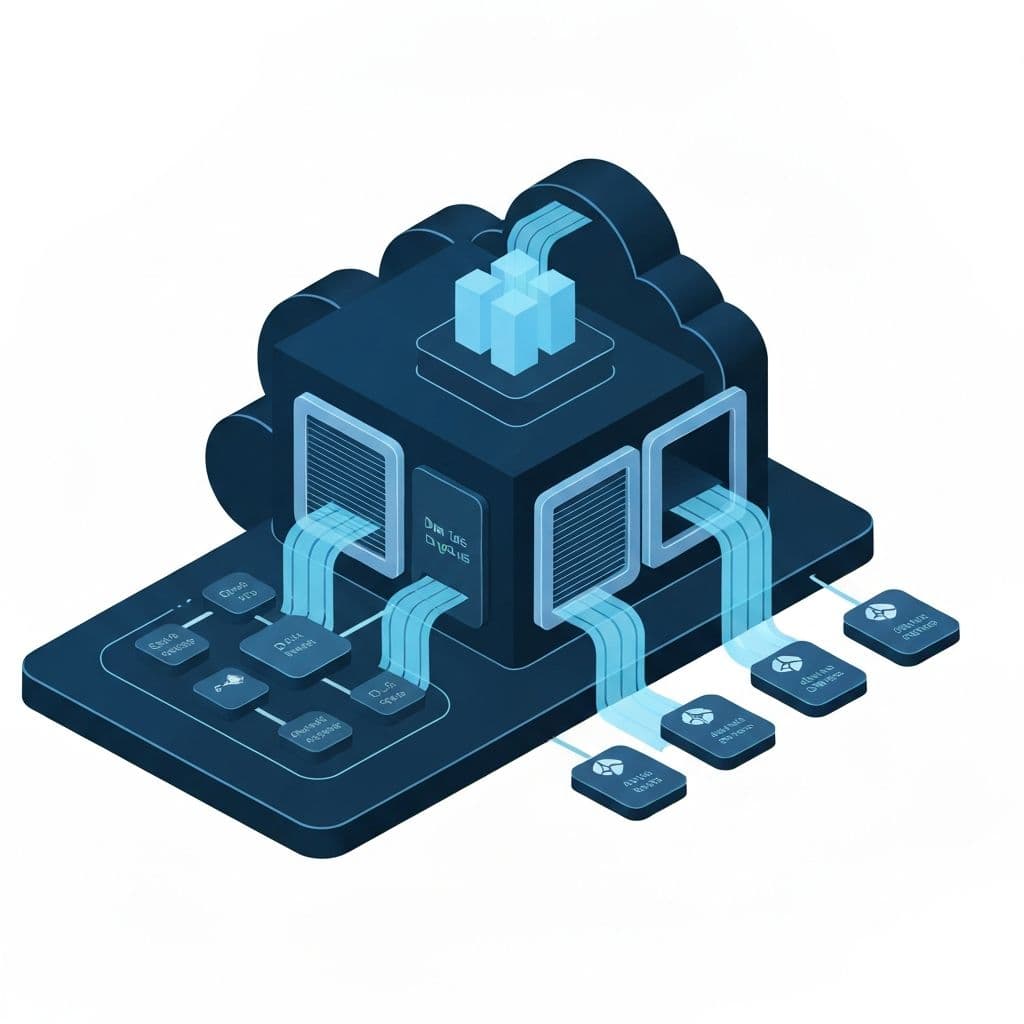
What is a Data Lakehouse?
A data lakehouse stores data in low-cost object storage and adds warehouse-style controls for analytics. It gives teams reliable tables and fast SQL queries without giving up flexible storage.
Core Technologies
The modern lakehouse stack typically includes:
- Delta Lake: ACID transactions on object storage
- Apache Iceberg: Open table format with time travel
- Apache Hudi: Incremental data processing
- Spark/Trino: Query engines for analytics
Architecture Comparison
| Feature | Data Warehouse | Data Lake | Lakehouse |
|---|---|---|---|
| ACID Support | Yes | No | Yes |
| Schema Enforcement | Strict | None | Flexible |
| Cost | High | Low | Medium |
| Real-time | Limited | Yes | Yes |
| BI Support | Native | Limited | Native |
| ML Workloads | Limited | Native | Native |
Implementation Steps
A lakehouse brings together warehouse reliability and data lake flexibility.
Phase 1: Foundation
- Set up object storage (S3, ADLS, GCS)
- Deploy table format (Delta, Iceberg)
- Configure metadata catalog (Hive, Glue)
Phase 2: Data Ingestion
Build robust ingestion pipelines:
- Batch ingestion for historical data
- Streaming for real-time updates
- Change data capture for source sync
Phase 3: Query Layer
Enable analytics with:
- SQL query engines (Trino, Spark SQL)
- BI tool integration (Tableau, Power BI)
- ML feature stores
Technology Selection Matrix
| Use Case | Recommended Format | Query Engine |
|---|---|---|
| BI/Reporting | Delta Lake | Spark SQL |
| ML Features | Apache Iceberg | Trino |
| Real-time | Apache Hudi | Flink SQL |
| Multi-cloud | Apache Iceberg | Trino |
Best Practices
Data Organization
- Partition by date for time-series data
- Use Z-ordering for multi-dimensional queries
- Implement data compaction schedules
Performance Optimization
- Enable predicate pushdown
- Configure file sizes (128MB-1GB)
- Use columnar formats (Parquet)
Governance
- Implement column-level access control
- Enable audit logging
- Set up data quality checks
Conclusion
A lakehouse lets you modernize data infrastructure without giving up reliability or flexibility.
If you are deciding whether a lakehouse fits your current stack, our data engineering team can compare cost, migration risk and performance.