
Operational software does not have to cost six figures. Hiring a developer runs about $133,080 a year before benefits, and an enterprise platform starts near $150,000, yet many mid-market fixes need neither. A fixed-scope sprint builds one working tool for $30,000 to $80,000 in 4 to 8 weeks, which is how companies avoid overpaying for a first build (BLS, 2024).
Why operational software usually costs more than it should
Most operational software is priced for a scope far larger than a single fix requires. A full in-house team, an enterprise platform, or an open-ended consulting engagement each carry overhead that a one-module problem does not. The result is a mid-market company paying enterprise prices to solve one process. The cost drivers are long timelines, broad scope, and platforms built for organizations ten times the size.
What a fixed-scope sprint actually costs and builds
A fixed-scope sprint (a defined 4 to 8 week engagement with a set price and a working deliverable at the end) costs $30,000 to $80,000 and produces working software (a tool connected to real data that a team uses day to day, not a presentation). The price is fixed before the work starts, so there is no open-ended bill. The budget covers a diagnostic, one built and tested module, integration with the existing systems, and training.
In the diagnostic phase (the first weeks, spent analyzing data, interviewing the team, and mapping the current process), the first question an owner asks is what will actually exist at the end. For one distributor, the answer was a working margin and inventory dashboard on its existing ERP in about six weeks, replacing a stack of manual spreadsheets, described in our operational visibility case. The tool sits on the systems a company already runs, so nothing is ripped out to make room for it.
The typical shape of a sprint, week by week
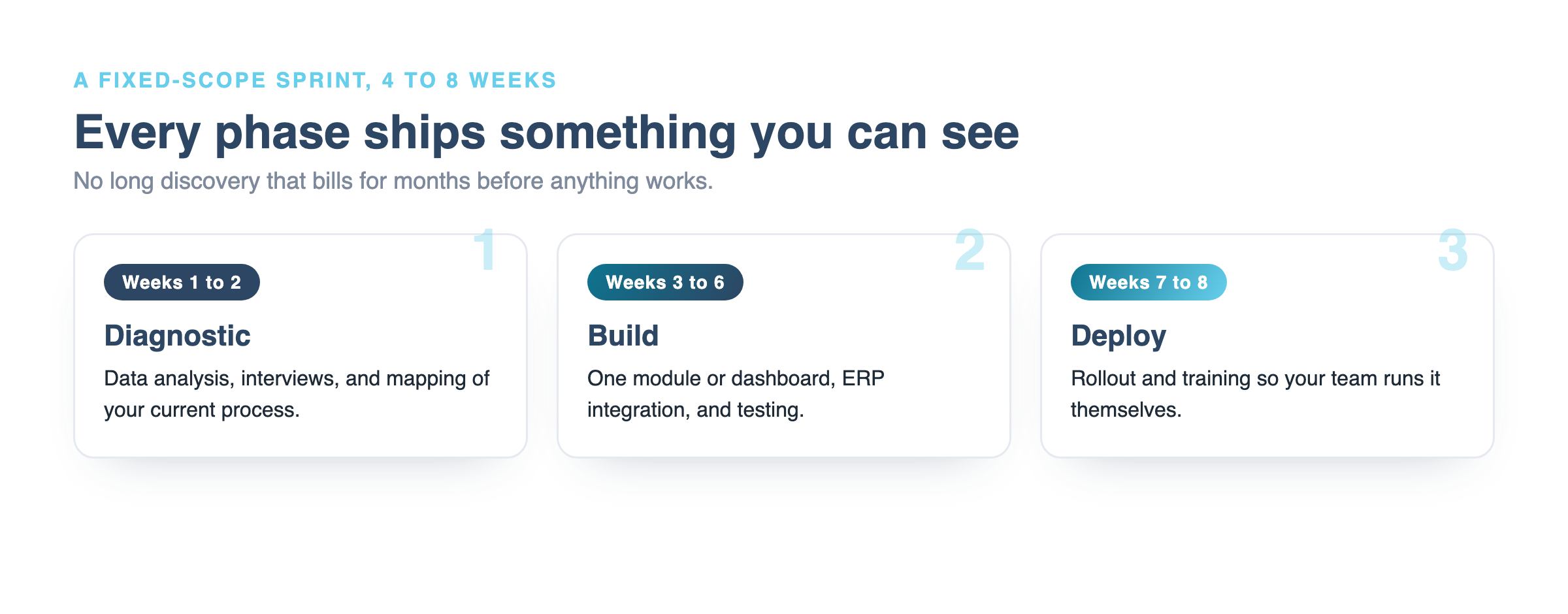
A sprint runs in three phases over 4 to 8 weeks, and every phase produces something visible. There is no long discovery period that bills for months before anything ships. The diagnostic phase grounds the work in real numbers, the build phase produces the tool, and the last phase puts it in the team's hands.
| Phase | Weeks | What happens |
|---|---|---|
| Diagnostic | 1 to 2 | Data analysis, interviews, and mapping of the current process |
| Build | 3 to 6 | One module or dashboard, ERP integration, and testing |
| Deploy | 7 to 8 | Rollout and training for the team |
ERP integration (connecting the new module to systems already in use, such as Epicor, Sage, or Prophet 21) is part of the build, not a surprise add-on. By the deploy phase, the tool runs on live data.
What a sprint leaves out, and why that keeps the price down
A sprint does not bill for strategy theater. There is no 100-page report, no multi-quarter roadmap, and no paid "phase 2 planning session" before anything works. Those line items are where a lot of software budgets quietly go. Cutting them is how the price stays fixed and low. If a piece of work does not end in software a team can open and use, it is left out on purpose, and that discipline is what keeps a first build in the tens of thousands rather than the hundreds.
How the cost compares
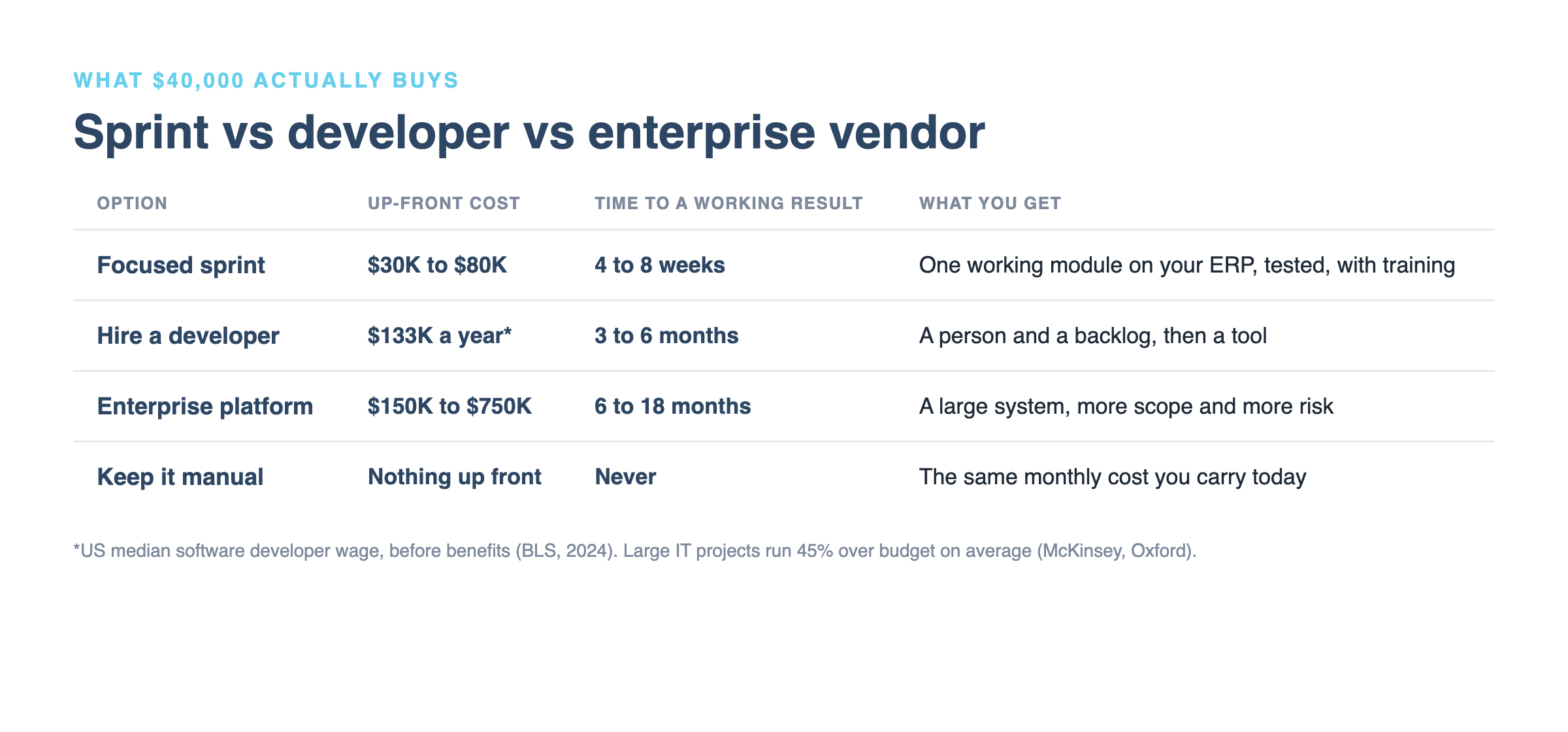
Against the alternatives, a sprint puts the least money at risk for the fastest working result. Hiring in-house is a year-long salary commitment before a tool exists. An enterprise platform is a six-figure contract on a long timeline. Leaving the process manual carries its own running cost every month.
| Option | Up-front cost | Time to a working result | What it produces |
|---|---|---|---|
| Focused sprint | $30,000 to $80,000 | 4 to 8 weeks | One working module on the ERP, tested, with training |
| Hire a developer | $133,080 a year median, before benefits (BLS, 2024) | 3 to 6 months to full productivity | A person and a backlog, then a tool |
| Enterprise platform | $150,000 to $750,000 first year (mid-market) | 6 to 18 months | A large system, more scope and more risk |
| Keep it manual | Nothing up front | Never | The same monthly cost carried today |
The build versus buy decision (hire and build in-house, buy a large platform, or run a focused sprint) is really about total cost of ownership (the full cost over time, not just the sticker price). Large IT projects run 45% over budget and deliver 56% less value than predicted (McKinsey and the University of Oxford, across 5,400 projects). A sprint is not always the right answer, but it is the cheapest way to find out, before committing a year of salary or a six-figure contract.
Spending in steps, not all at once
Sprints let a company spend in steps instead of committing a large budget up front. The first sprint fixes visibility, the next adds automation, the next adds forecasting, and each one builds on the data foundation the last one created. Every step has to earn the next, so nothing is over-bought before it proves out.
- Sprint 1: visibility. One dashboard or report that shows the numbers a team cannot see today.
- Sprint 2: automation. Removing the manual steps around that workflow.
- Sprint 3: forecasting. Using the now-clean data to plan ahead.
For the risk logic behind this model, see why most operations software projects take 12 months to prove they were wrong and when SMBs should build custom operational modules. The engagements themselves are scoped as focused operational sprints for SMBs.
Frequently asked questions
How much does a fixed-scope software sprint cost?
A fixed-scope sprint runs $30,000 to $80,000, set before the work starts, so there are no open-ended fees. That covers a diagnostic, one built and tested module, integration with the existing ERP, and training. The price reflects one operational problem solved, not a broad platform or a long consulting engagement.
Why is a sprint cheaper than hiring or buying?
A developer costs about $133,080 a year before benefits and takes 3 to 6 months to reach full productivity (BLS, 2024). An enterprise platform starts near $150,000 and runs for many months. A sprint solves one problem in weeks for a fixed fee, so the spend matches the size of the fix, not the size of the vendor.
What does a sprint leave out to keep the price down?
Long strategy documents, multi-quarter roadmaps, and paid planning sessions that ship no software. A sprint is scoped to one problem and one working result. Anything that does not end in a usable tool is left out on purpose, which is what keeps both the cost and the timeline fixed.
What does the budget actually deliver?
A working module connected to live data, running on the existing systems, with the team trained to use it. Not a prototype that needs a second budget to finish, and not a slide deck. If the sprint targeted month-end reporting, the result is a report the team runs itself, usable the week it ships.
Do the costs add up if a company runs several sprints?
Each sprint is priced on its own and reuses the data foundation the last one built, so later sprints often reach a result for less. A company decides after each one whether the outcome earned the next. Because no large budget is committed up front, spending stays tied to proven results.
Where a sprint fits
A sprint is not the answer to everything. It fits when one operational problem is worth fixing and a company wants a working result before committing to a bigger build. If that describes a process worth fixing, tell 3ALICA which one, and we will walk through what a sprint would and would not do for it.