Legacy Software Modernization with AI
Modernize legacy software from what the code actually does
We use AI to read your codebase, trace business rules to the source and map the dependencies. Then we replace the parts that block change, one capability at a time, tracking what moves from old to new.
Moving a data warehouse or ETL estate to Microsoft Fabric, Snowflake, or Databricks? See Data Platform Migration.
How it works
The code is the most reliable record of what your system does. We start there.
Read the code
We use AI to read the codebase instead of starting from interviews or old documentation. Within days you get a capability inventory, a dependency map and a risk register for the agreed scope.
Write down the rules
We document the business rules the code enforces. Each documented rule includes a reference to its implementation, so your engineers can check it against the source.
Plan the target
With the rules and dependencies on paper, we agree on the target design and a week-by-week plan for moving capabilities to it.
Replace piece by piece
Each capability you decide to replace is rebuilt next to the running system and tracked from old to new. The old system keeps working until the new piece has taken over.
Brownfield engineering
Change old code without breaking what the business runs on
In an old system, some behavior that looks wrong is what the business depends on. Three rules from our AI Factory method keep it intact while the code moves.
The old system is the test
Same inputs, compared answers
Where no trustworthy tests exist, the old and new paths run on the same recorded inputs. The new answers go to no one until they match, and every difference nobody declared upfront blocks the release. A match covers the traffic that was observed, so we name what it did not cover.
Pin today's behavior first
Before anyone changes a path, tests record what it does today, odd outputs included. Someone other than the person making the change writes them, and odd outputs go to the owner as questions, not fixes.
Done means the old code is unreachable
A module is finished when nothing in it calls the old implementation and that dependency is removed. A wrapper around the old code does not count as replaced.
Keep, wrap or replace
Not every part of a legacy system needs replacing. Once the rules are written down, each capability gets one of three decisions.
Keep
It works and rarely changes. It stays in place, and the behavior you depend on gets tests around it.
Wrap
The core is sound and the gap is around it. We add API, reporting or workflow layers instead of rebuilding.
Legacy Workflow Modernization SprintReplace
It blocks change. We rebuild it on the target platform, one capability at a time.
- Pricing rulesReplaceRetiredLive on the new platform
- Order entryReplaceRunning in parallelBeing rebuilt
- ReportingWrapStill in placeAPI layer on top
- InvoicingKeepStill in place, tests pinnedNot moving
How each change is accepted
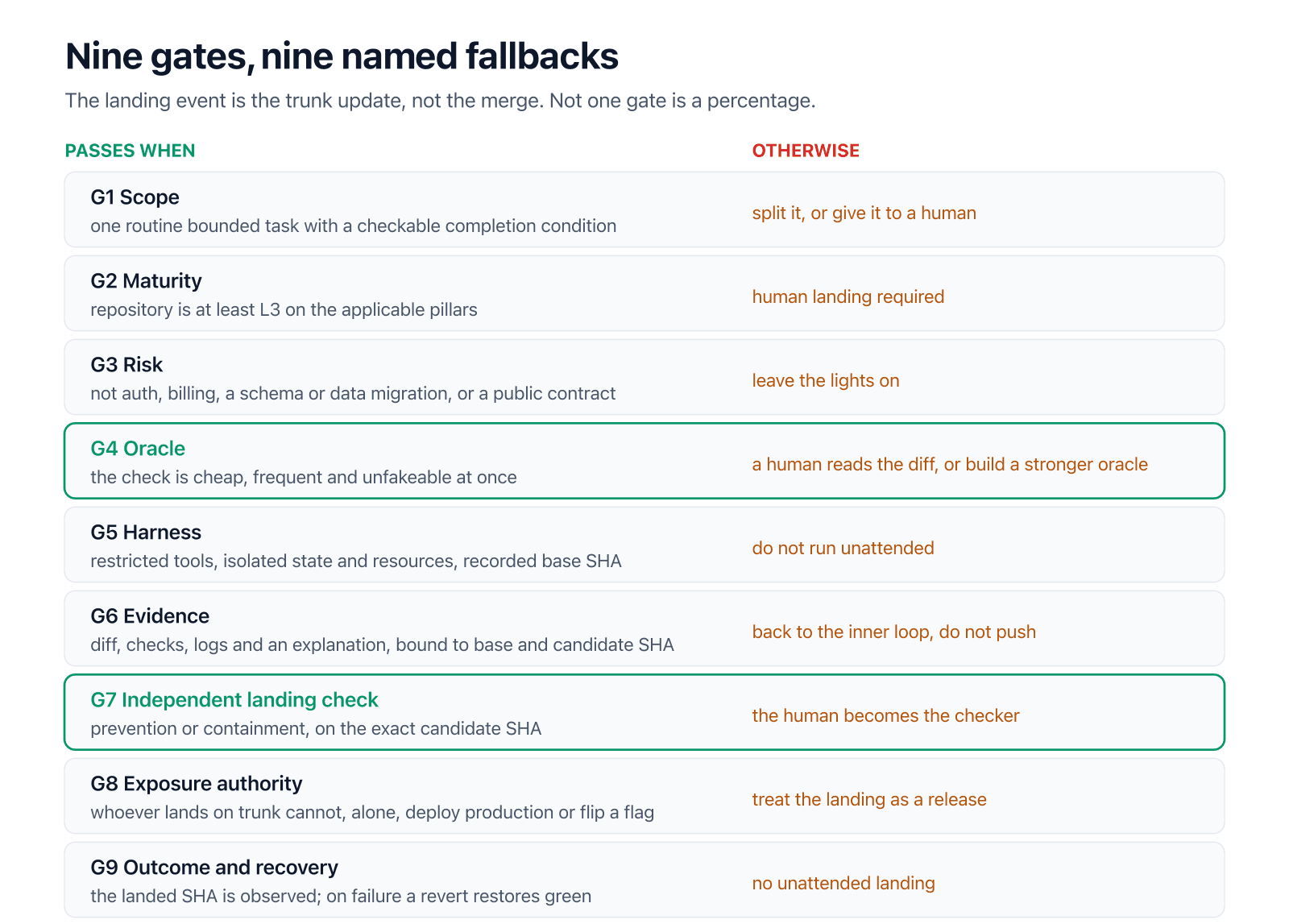
Replacement uses the same evidence rules as our AI Factory, and a person lands each change. A change ships when its evidence is in place, not when it looks finished.
A test that catches a break
Before a change ships, we break the behavior on purpose and confirm the tests covering it go red.
Evidence on the exact commit
Each change carries the intent it was built against and the checks it passed, tied to the commit that ships.
A rehearsed way back
The revert to the last green build is rehearsed before release, so restoring it is routine rather than an incident.
The Economics of Modernization
Stop bleeding OpEx on server maintenance. Modern infrastructure pays for itself.
Eliminate on-premise hardware, legacy licensing fees, and emergency server maintenance.
Automated CI/CD pipelines replace manual deployment, allowing you to ship features in hours, not weeks.
Auto-scaling cloud environments handle traffic spikes automatically without crashing.
What stays with your team
The knowledge that lived only in the code ends up in documents and tests your engineers can maintain.
- The capability inventory, dependency map and risk register
- The business rules, each linked to its implementation
- The target design and the week-by-week plan
- Tests that pin the behavior you agreed to keep
- A change record with the evidence for every release
Case studies
Modernization work our team delivered
See all case studiesEnterprise Migration Security
Your data integrity is our top priority.
Questions engineering leaders ask
Get in touch
Tell us about the system you need to move off
Name the system, the stack and what it blocks today. We reply within one business day and tell you whether a code-first modernization fits, and where we would start.
Email us directly
sales@3alica.com